Moisture control is an important part of plastic processing, particularly when manufacturers work with hygroscopic engineering polymers. These materials can absorb moisture from their surrounding environment, allowing water vapour to penetrate into the core of the polymer granules. If this moisture is not adequately removed before processing, it can affect the physical properties, surface finish, and consistency of the final plastic component. Bry-Air explains that moisture trapped inside hygroscopic polymers can contribute to reduced physical properties and poor surface finish when the material enters the molten stage.
A properly selected plastics dryer can provide controlled drying conditions before resin reaches the processing machine. Rather than relying only on ambient or heated air, desiccant drying technology reduces the moisture content of the process air, creating conditions that are more suitable for removing moisture from hygroscopic materials.
Effective drying is therefore not simply about heating plastic granules. Temperature, airflow, drying time, dew point, material characteristics, and required moisture levels all need to be considered together. The correct settings should always be established according to the polymer manufacturer’s recommendations and the requirements of the particular production process.
What Makes Hygroscopic Plastic Materials Difficult to Dry?
How Does Moisture Enter Polymer Granules?
Hygroscopic polymers have the ability to absorb moisture from their surroundings. Environmental humidity, storage conditions, handling practices, and certain material preparation processes can all influence the amount of moisture present in the resin.
Unlike surface moisture, internally absorbed moisture cannot always be removed effectively through basic heating. Bry-Air notes that moisture can seep into the core of hygroscopic polymer granules because of vapour pressure differences, which is why high concentrations of low-dew-point air are required for effective drying.
The type of polymer is also important. Materials such as Nylon, PET, PC, TPU, TPE, PBT, POM, ABS, and other engineering polymers can have specific drying requirements. Manufacturers should therefore evaluate the moisture sensitivity of each material rather than applying one generic drying process to every resin.
What Happens When Resin Is Not Properly Dried?
When moisture remains in polymer granules and the material is subsequently heated, the water can turn into steam during processing. This can interfere with the polymer structure and may affect the physical properties of the finished material.
Depending on the resin and processing conditions, inadequate drying can contribute to surface defects, inconsistent processing, and reduced mechanical performance. For moisture-sensitive materials, achieving the required moisture level before processing is therefore an important part of quality control.
How Does Desiccant Drying Improve Plastic Processing?
What Is the Role of Low-Dew-Point Air?
Dew point is an important parameter in the drying process because it indicates the moisture content of air. Lower-dew-point air contains less water vapour and provides a stronger drying potential when it comes into contact with moisture-containing resin.
Desiccant drying systems use moisture-adsorbing material to reduce the humidity of process air before it reaches the polymer. The dry air then circulates through the resin, encouraging moisture to move out of the granules and into the air stream.
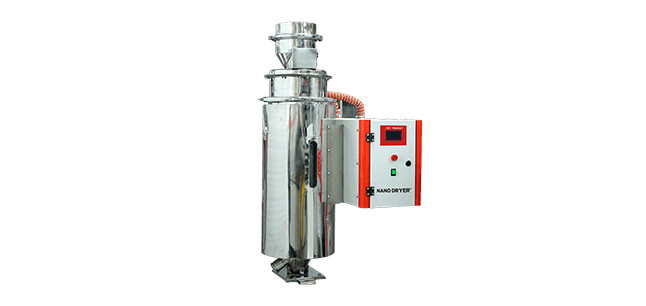
Bry-Air’s Nano Dryer is a compact, waterless desiccant dryer designed for low-throughput applications requiring precise moisture control. The current product information states that the system can operate at dew points ranging from approximately -30°C to -35°C, with the product page also describing a -40°C dew-point capability for specific operating conditions.
Why Is Consistent Drying Important?
Consistent drying conditions help manufacturers establish a more predictable material preparation process. Variations in moisture levels can affect how polymers behave during melting, mould filling, cooling, and final product formation.
A controlled drying environment can reduce dependence on changing ambient humidity. This is particularly relevant when processing materials that are sensitive to moisture and require specific drying conditions before entering an injection moulding or related process.
What Should Manufacturers Consider When Selecting a Plastic Dryer Machine?
Polymer Type and Moisture Requirements
The first consideration should be the polymer being processed. Different plastics absorb moisture at different rates and have different recommended drying temperatures and times.
Manufacturers should refer to the resin supplier’s technical specifications to determine the appropriate drying conditions. These specifications may include recommended temperature, drying duration, target moisture content, and required dew point.
A plastic dryer machine should then be selected according to those requirements rather than based solely on its physical size or airflow capacity. Matching the dryer to the resin helps ensure that the equipment can provide the required drying environment.
Production Throughput
Throughput is another important factor. A dryer must be capable of supplying sufficient dry air for the quantity of resin being processed within the required production cycle.
Bry-Air’s Nano Dryer is designed for low-throughput applications and provides handling capacity in the range of approximately 6 to 12 kg per hour. Standard models include NANO-15 and NANO-25, corresponding to 15 and 25 CMH process air inflow.
For higher production volumes, manufacturers may require larger resin-drying systems. Equipment selection should therefore begin with actual material consumption and the required drying performance.
How Can a Compact Dryer Help Small Plastic Processing Operations?
Efficient Use of Production Space
Production-floor space can be an important consideration for smaller processing facilities. Additional auxiliary equipment can increase the required footprint and make equipment placement more complicated.
Bry-Air’s Nano Dryer is designed to mount on the hopper, which eliminates the need for separate floor space for the dryer cabinet. The company describes the design as a compact, zero-footprint solution intended for low-throughput plastic processing applications.
A hopper-mounted configuration also keeps the drying equipment close to the point where the resin enters the processing machine. This can help create a more streamlined material-handling arrangement while maintaining controlled drying conditions.
Waterless Operation
Utility requirements should also be considered when selecting drying equipment. A system that requires additional cooling water infrastructure may require more installation planning and supporting connections.
The Nano Dryer is designed as a waterless system and does not require a cooling water connection. This can simplify installation for suitable low-throughput applications while supporting a compact equipment arrangement.
Waterless operation should still be considered alongside resin requirements, throughput, dew point, drying temperature, and overall process conditions when evaluating equipment suitability.
How Can Proper Drying Support Finished Product Quality?
Maintaining Polymer Properties
Proper drying helps prepare moisture-sensitive resin for the melting and moulding process. When internal moisture is controlled before processing, manufacturers can create more consistent conditions for the polymer to undergo thermal processing.
Bry-Air states that insufficient removal of core moisture can lead to reduced physical properties and poor surface finish.
This makes moisture control particularly relevant for applications where finished components must meet specific mechanical, dimensional, or cosmetic requirements.
Reducing Moisture-Related Processing Problems
Moisture can become a source of process variation when resin is exposed to heat inside the processing machine. Steam formation and polymer degradation can affect the behaviour of the material during processing.
Proper drying can help reduce the likelihood of moisture-related defects, although drying should be considered as one part of the overall manufacturing process. Material storage, conveying, temperature settings, mould conditions, and processing parameters also influence final product quality.
What Features Should Be Evaluated in a Plastics Drying System?
Dew Point Control and Monitoring
Dew point monitoring can provide valuable information about the condition of the process air. Maintaining the required dew point helps ensure that the drying environment remains suitable for moisture removal.
Bry-Air’s Nano Dryer includes precise dew point control and offers a digital dew point meter as an option. Its control system also includes features such as RTD inputs, digital inputs, isolated outputs, and RS485 communication with MODBUS RTU capability.
The appropriate level of monitoring depends on the production environment and the degree of process control required.
Installation and Operating Requirements
Manufacturers should also consider equipment dimensions, mounting arrangements, utility requirements, airflow, and maintenance access. These factors influence how easily a dryer can be integrated into the existing production setup.
The Nano Dryer is specifically designed for hopper mounting and compact installation. Its waterless configuration can further reduce the infrastructure required for suitable applications.
How Should Plastic Drying Equipment Be Maintained?
Monitor Key Operating Parameters
Regular monitoring of dew point, temperature, airflow, drying time, and material throughput can help operators identify changes in drying performance.
These parameters should be compared with the recommended values for the polymer being processed. Unexpected changes can indicate that the equipment, material handling system, or operating conditions require inspection.
Prevent Moisture Regain
Drying is only effective if the material remains adequately protected after moisture has been removed. Hygroscopic resin can regain moisture when exposed to humid surroundings.
Material storage containers, conveying systems, hopper arrangements, and transfer processes should therefore be considered as part of the complete moisture-control strategy. Maintaining appropriate conditions between drying and processing helps preserve the desired moisture level.
How Can Manufacturers Choose the Right Drying Solution?
Selecting a suitable drying system requires consideration of the entire plastic processing operation. Polymer type, moisture sensitivity, production throughput, drying temperature, required dew point, residence time, installation space, and utility availability all influence the appropriate equipment configuration.
For low-throughput and precision applications, a compact desiccant dryer can provide controlled moisture removal while reducing installation requirements. Higher-volume operations may require larger systems with greater airflow and material-handling capacity.
The key is to match the drying technology with the actual characteristics of the polymer and the production requirement. A technically appropriate dryer can support consistent resin preparation and help manufacturers maintain the process conditions required for their finished products.
Conclusion
Moisture control is a critical consideration when processing hygroscopic engineering plastics. Moisture can penetrate into polymer granules and may affect material properties and surface quality if it is not adequately removed before processing. Desiccant drying provides a controlled method of reducing moisture by supplying low-dew-point air to the resin.
Choosing the right drying equipment requires careful evaluation of polymer characteristics, throughput, dew point, temperature, airflow, installation requirements, and material-handling practices. Compact hopper-mounted solutions can be particularly useful for smaller processing operations where floor space and utility requirements are important.
Manufacturers evaluating their plastic drying requirements can Contact Us to discuss the appropriate drying technology and application requirements with Bry-Air’s technical team.