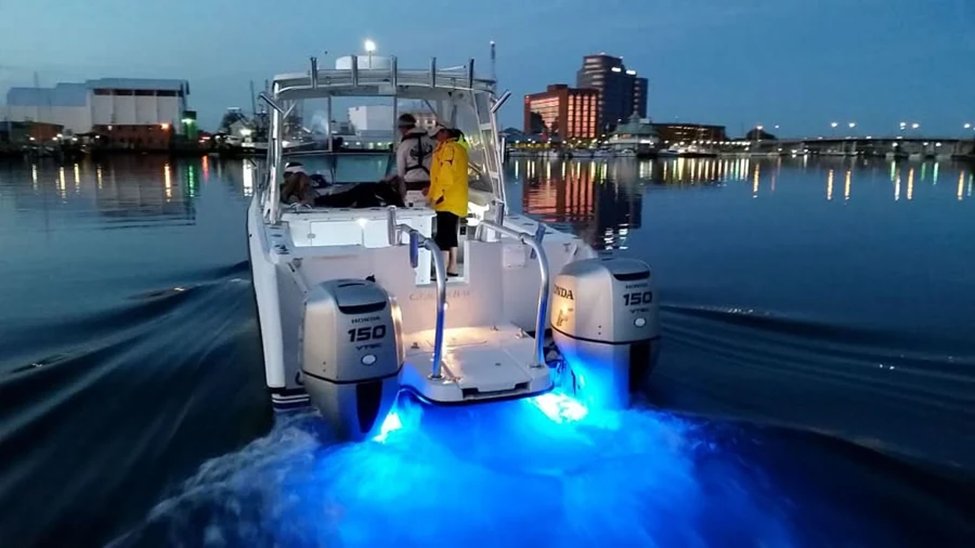
Docks become difficult to use after sunset. Uneven surfaces, wet boards, ropes, cleats, ladders, and changes in elevation can be hard to see in low light. A person walking from shore to a boat may not notice a slippery patch or an object left across the walkway until it becomes a trip hazard.
Good marine dock lighting addresses these problems by making the dock, its edges, and nearby water easier to see. Properly positioned lights can support safer movement, help boat operators judge their approach, and make important equipment visible after dark.
Better Visibility Along Walkways
A dock is rarely a completely flat, obstacle-free surface. Mooring lines may cross walkways, fishing equipment can be left near seating areas, and dock hardware creates raised points that can catch a person’s foot. Wet surfaces can also reflect surrounding light, making some areas appear brighter while hiding details.
Lighting placed along the walking surface helps reveal these changes. Low-level fixtures can illuminate the path without producing excessive glare. The goal is not simply to make the entire dock extremely bright. Even controlled lighting generally provides more useful visibility than a few intense fixtures separated by large dark areas.
Lighting should also cover access points, steps, ramps, and ladders. These locations often involve changes in height or require people to shift their footing. Clear visibility makes those movements easier to manage.
See also: Vograce: Bringing Creative Ideas to Life With Custom Designs and Premium Materials
Reducing the Risk of Slips and Falls
Waterfront surfaces can become slippery because of moisture, algae, dirt, and other materials. At night, identifying these conditions becomes harder. A person may step onto a wet section without realizing it is different from the surrounding surface.
Marine dock lighting cannot remove the physical cause of a slip, but it can make surface conditions easier to identify. Fixtures positioned to illuminate walking areas from useful angles can reveal texture, edges, and changes in the surface.
Light should also be directed carefully. A bright fixture shining directly toward someone’s eyes can reduce visibility rather than improve it. Shielded or downward-facing fixtures can help maintain a clearer view of the walking surface.
Making Dock Edges Easier to See
The boundary between a dock and open water deserves particular attention. In poor lighting, the edge can disappear visually, especially when the water is dark and there are few surrounding reference points.
Low-level lighting along the perimeter can provide a visual indication of where the dock ends. This is useful for people walking near the edge, handling equipment, or moving between different sections of a marina.
The lighting should provide enough definition without creating excessive reflection on the water. Strong glare can make it harder to distinguish the dock from the surrounding surface.
Helping Boats Approach the Dock
Dock safety also involves the boat arriving at the dock. A poorly illuminated landing area can make it difficult for an operator to judge distance, identify the correct position, or see people waiting on the dock.
Marine lighting can make dock structures, pilings, cleats, and other fixed points easier to identify during an approach. This gives the operator more visual information while reducing the chance of contacting an unseen structure.
Lighting should not be aimed directly toward an approaching boat. Excessive brightness in the operator’s line of sight can create glare and make the surrounding area harder to see. Fixtures positioned to illuminate the dock rather than the operator’s eyes are generally more practical.
Improving Visibility of Mooring Equipment
Cleats, bollards, ropes, fenders, and other mooring equipment are used frequently after dark. Finding them in poor lighting can slow down docking and create unnecessary hazards.
A well-planned lighting layout can illuminate these points without requiring extremely bright general lighting across the entire dock. Individual fixtures may be positioned near areas where people regularly handle lines or secure vessels.
This also makes it easier to identify equipment that has been moved, damaged, or left in an unusual position. A clear view of the working area can be especially useful during busy periods when several people are handling a boat at once.
Supporting Safer Nighttime Maintenance
Docks require regular inspection and maintenance. Loose boards, damaged hardware, exposed fasteners, worn surfaces, and other problems are easier to identify when the area has adequate illumination.
Maintenance workers may also need to access electrical connections, pumps, ladders, storage areas, or other equipment after sunset. Lighting around these locations reduces the need to rely on handheld flashlights alone.
Permanent lighting also allows inspections to take place under more consistent conditions. A flashlight can create a narrow beam, leaving surrounding areas in darkness. Fixed fixtures can provide broader coverage while leaving the worker’s hands free.
Choosing Light Placement Carefully
The position of a fixture can be just as significant as its brightness. Lights placed too high may create shadows beneath railings, benches, and other structures. Fixtures installed too close to the water may experience additional exposure to spray and moisture.
Low-profile lights are often suitable for walkways because they can provide illumination close to the surface without dominating the space. Step lights can highlight changes in elevation, while perimeter fixtures can define the dock edge.
Spacing also deserves attention. Several moderate fixtures can provide more consistent visibility than a small number of powerful lights. The layout should account for the dock’s shape, boat slips, access routes, seating areas, ladders, and other features.
Selecting Fixtures for a Waterfront Environment
Dock lighting operates in an environment where moisture, salt, spray, wind, and temperature changes are common. Fixtures therefore need to be appropriate for outdoor marine conditions.
Materials, seals, mounting hardware, electrical protection, and installation methods all affect long-term performance. A fixture that is suitable for a dry indoor area may not be appropriate for a dock exposed to water.
Energy use can also influence the choice. LED fixtures are commonly used for marine applications because they can provide substantial illumination with relatively low power consumption and long service life. However, the fixture’s marine suitability and installation quality still matter more than simply selecting a particular light source.
Preventing Glare and Dark Spots
More light does not automatically mean better visibility. Excessive brightness can create glare, while poorly positioned fixtures may cast deep shadows into important areas.
A useful dock lighting plan aims for consistent illumination. Walkways, steps, equipment areas, and edges should be visible without creating harsh contrasts between extremely bright and dark sections.
Light color can also affect visibility. Neutral or warm tones may create a more comfortable environment, while the most suitable color depends on the dock’s purpose and surrounding conditions. The fixture should provide clear visibility without becoming a distraction for boat operators or nearby residents.
Maintenance Keeps Lighting Effective
Even well-designed lighting can lose effectiveness if fixtures are neglected. Dirt, salt deposits, corrosion, damaged lenses, loose mounts, and failed bulbs can gradually reduce illumination.
Regular checks should cover fixture condition, wiring, mounting points, lenses, and the areas being illuminated. Any dark section that develops along a walkway or dock edge should be investigated rather than ignored.
Marine environments can accelerate corrosion, so hardware should also be inspected periodically. Early maintenance can prevent a small fixture or mounting problem from becoming a larger safety concern.
A Practical Part of Dock Safety
Marine dock lighting works alongside other safety measures such as non-slip surfaces, secure railings, clear walkways, properly maintained ladders, life-saving equipment, and responsible boating practices.
Its value is straightforward: people need to see where they are walking, boat operators need to see where they are docking, and maintenance personnel need enough visibility to identify hazards. A lighting system designed around those needs can make nighttime activity around the water easier to manage and less dependent on guesswork.
Good lighting does not need to dominate a waterfront setting. Carefully positioned fixtures, suitable marine-rated equipment, controlled brightness, and regular maintenance can provide the visibility needed while keeping the dock practical and comfortable after sunset.