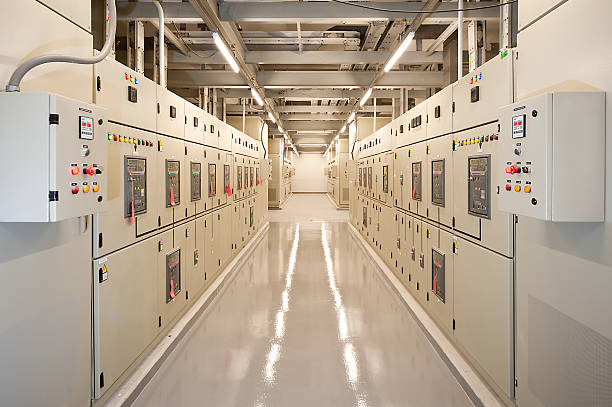
Electrical switchgear systems play a critical role in managing power distribution, preventing equipment damage, and maintaining operational stability across industrial facilities, commercial buildings, and utility networks. As electricity demand grows and energy costs remain an important operating consideration, organizations increasingly need electrical infrastructure that does more than distribute power. Modern switchgear must support efficient energy use, dependable fault protection, improved visibility into electrical performance, and safe maintenance practices.
Well-designed switch gear systems help achieve these objectives by combining circuit breakers, disconnectors, protective relays, busbars, metering equipment, and control devices within a coordinated electrical distribution arrangement. When correctly specified and maintained, these components can reduce avoidable electrical losses, limit the consequences of faults, and help operators identify developing problems before they cause significant downtime.
Understanding how switchgear systems improve energy efficiency and equipment protection begins with their basic functions and extends to intelligent monitoring, protection coordination, thermal management, and lifecycle planning.
Understanding the Role of Switchgear in Electrical Distribution
Switchgear refers to electrical equipment used to switch, control, isolate, and protect circuits and connected electrical assets. It is installed at different points throughout an electrical network, from incoming utility supplies and transformer substations to motor control centers and individual equipment feeders.
Its primary purpose is to maintain controlled power distribution while providing a means to interrupt abnormal electrical conditions. Depending on the application, switchgear may operate at low, medium, or high voltage, with different designs and protection requirements for each voltage level.
How Switchgear Protects Electrical Equipment
Electrical faults can arise from insulation deterioration, damaged cables, moisture ingress, overloaded circuits, loose connections, or component failure. These conditions may produce excessive current, abnormal voltage, or dangerous electrical arcing.
Protective devices detect defined abnormal conditions and initiate the appropriate response. Circuit breakers interrupt fault current within their rated capabilities, while protective relays determine when a trip command is necessary. Disconnectors provide isolation for maintenance where the equipment and switching arrangement permit it.
By limiting fault duration and isolating the affected circuit, a coordinated switchgear system can reduce damage to transformers, motors, cables, generators, and other connected equipment.
Why Equipment Protection Supports Energy Efficiency
Equipment protection and energy efficiency are closely related, although they are not the same objective. A circuit breaker does not automatically reduce electricity consumption simply because it is installed. Its contribution comes from preventing avoidable equipment failures, enabling controlled maintenance, and supporting stable electrical operation.
For example, an overheated connection can waste energy through increased resistance while also creating a fire or equipment failure risk. Detecting and correcting the problem helps reduce unnecessary losses and protects the connected circuit.
Similarly, effective fault isolation can prevent a localized electrical incident from disrupting an entire production line. Reduced downtime, fewer replacement components, and better maintenance planning can improve overall operational efficiency.
Key Switchgear Features That Improve Energy Efficiency
Energy performance depends on equipment design, loading conditions, maintenance quality, and how effectively electrical demand is monitored. Several switchgear features can help facilities improve these areas.
Low-Loss Electrical Components
Electrical current flowing through conductors and switching contacts produces resistive losses. These losses are influenced by conductor resistance, current magnitude, contact condition, and operating temperature.
Switchgear designed with appropriately rated busbars, suitable conductor materials, and reliable contact assemblies can help minimize unnecessary losses. Correctly sized equipment also helps prevent excessive temperature rise under expected operating conditions.
However, oversized equipment is not automatically the most efficient choice. Engineers should evaluate actual load profiles, future expansion requirements, short-circuit withstand capacity, and the thermal performance of the complete assembly.
Power Monitoring and Energy Metering
Modern switchgear can incorporate multifunction meters and digital monitoring devices that measure voltage, current, active power, reactive power, energy consumption, and power factor. Depending on the installation, monitoring may also include demand peaks, harmonic distortion, and electrical imbalance.
These measurements help facility managers understand where and when energy is being consumed. For example, a plant may discover that certain production areas draw substantial power during idle periods or that a group of motors operates inefficiently under changing loads.
With reliable circuit-level data, maintenance and energy teams can prioritize improvements based on actual operating conditions instead of relying exclusively on estimated consumption.
Power Factor and Reactive Power Management
Low power factor can increase current for a given amount of useful active power delivered to a load. Higher current may increase conductor losses and consume additional capacity in transformers, cables, and switchgear.
Switchgear can provide the connection, protection, and control functions needed for power factor correction equipment, such as capacitor banks or suitable reactive power compensation systems. In facilities with variable loads, automatic controllers can adjust compensation according to measured demand.
The compensation system must be designed carefully. Capacitors can interact with network harmonics and create resonance concerns, so engineers should evaluate harmonic conditions, switching behavior, and equipment ratings before installation.
Advanced Protection Functions for Greater Reliability
A modern switchgear system should respond appropriately to electrical faults while avoiding unnecessary interruptions during normal operation. This requires more than selecting a circuit breaker with a suitable current rating.
Protection Coordination and Selective Tripping
Protection coordination ensures that the protective device closest to a fault operates first wherever the system design permits. This approach helps isolate the affected circuit while keeping unaffected parts of the facility energized.
Engineers assess circuit-breaker characteristics, relay settings, prospective fault currents, and the operating times of upstream and downstream devices. Depending on the application, coordination studies may include overload, short-circuit, earth-fault, and other protection functions.
Selective protection is particularly valuable in manufacturing plants, hospitals, data centers, and continuous-process facilities, where an unnecessary shutdown can have substantial operational consequences.
Arc-Flash Risk Reduction
An electrical arc fault can release intense heat, light, pressure, and molten material. The consequences depend on the available fault current, arc duration, equipment design, and working distance.
Risk-reduction measures may include suitable switchgear construction, arc-resistant designs where specified, properly engineered protection settings, remote switching, and maintenance procedures that minimize exposure.
Faster fault clearing can reduce incident energy in applicable circumstances, but protection settings must be engineered carefully to preserve coordination and dependable operation. Arc-flash assessments, equipment labels, training, and appropriate personal protective equipment remain important parts of an overall safety program.
Overload and Motor Protection
Motors and other industrial loads can experience prolonged overcurrent, phase imbalance, stalled operation, or other abnormal conditions. Appropriate protective devices can detect selected conditions and disconnect equipment before damage becomes severe.
Motor control centers and feeder switchgear may combine circuit protection, contactors, overload relays, and monitoring functions. Correct selection depends on the motor’s starting characteristics, operating duty, connected load, and applicable protection requirements.
Preventing motor damage can reduce repair costs and avoid the additional energy and production losses associated with unexpected outages.
Digital Monitoring and Predictive Maintenance
Digital capabilities are changing how maintenance teams inspect and manage switchgear. Instead of relying solely on fixed inspection intervals, operators can use condition data to identify equipment that needs attention.
Thermal Monitoring and Early Fault Detection
Loose terminals, deteriorated contacts, uneven loading, and poor electrical connections can create localized heating. Infrared inspections and installed temperature sensors can help identify abnormal temperature patterns before a failure occurs.
Thermal measurements should be interpreted in context, including load current, ambient temperature, equipment design, and measurement conditions. A temperature difference between similar phases can be a useful warning sign, but it requires investigation rather than an automatic assumption about the cause.
Corrective action may involve de-energized inspection, connection maintenance, load redistribution, or replacement of deteriorated components under approved safety procedures.
Condition-Based Maintenance
Condition-based maintenance uses information about equipment health to guide inspection and servicing. Depending on switchgear type and criticality, useful information may include operating counts, breaker trip history, contact wear indicators, temperature trends, insulation monitoring, and diagnostic alarms.
This approach can help maintenance teams focus resources on components showing signs of deterioration. It may also reduce unnecessary intervention on equipment operating within its expected condition limits.
Condition-based maintenance does not eliminate routine inspections or manufacturer-recommended servicing. Instead, it complements those activities by providing additional evidence for maintenance decisions.
Integrating Switchgear with Building and Industrial Management Systems
Digital meters and protection devices can communicate with supervisory control and data acquisition systems, building management platforms, or industrial energy management systems through supported communication interfaces.
When data is integrated appropriately, operators can view electrical demand, investigate alarms, identify unusual consumption patterns, and coordinate maintenance with production schedules.
Communication design should include suitable access controls, network segmentation, configuration management, and cybersecurity procedures. Monitoring and remote control capabilities must never compromise the fundamental safety functions of electrical protection equipment.
Selecting Switchgear for Long-Term Performance
A switchgear installation must be designed around the electrical network it serves. Purchasing decisions based only on initial cost or nominal current can create problems with protection, thermal performance, expansion, and maintenance.
Assessing Electrical Ratings and Site Conditions
The design process should establish rated voltage, operating current, frequency, prospective short-circuit current, insulation requirements, and the expected operating environment. Engineers should also consider ambient temperature, humidity, dust, corrosion, altitude, enclosure protection, and access restrictions.
The equipment’s short-circuit withstand and interruption capabilities must match the system study. Where loads change over time, the design should account for realistic demand profiles and planned expansion without overlooking fault-duty requirements.
Considering Total Cost of Ownership
The initial purchase price represents only one part of the long-term cost of a switchgear installation. Energy losses, scheduled servicing, replacement parts, downtime, equipment availability, and the cost of electrical incidents all influence lifecycle expenditure.
A practical assessment should compare the expected operating costs of suitable designs over the intended service life. Monitoring capabilities may justify additional initial investment where they provide useful information for energy management or reduce the consequences of unplanned failures.
Planning for Maintenance Access and Future Expansion
A well-designed installation provides safe access for inspections, testing, and maintenance. Clear labeling, appropriate working space, accessible test points, and documented switching procedures can reduce maintenance complexity.
Modular arrangements and planned spare capacity may simplify future additions, but any extension must preserve electrical ratings, protection coordination, and the verified performance of the assembly. Changes to connected loads should trigger a review when they affect fault levels or operating conditions.
Standards, Testing, and Commissioning
Compliance with applicable electrical standards supports safe equipment selection, construction, and verification. For low-voltage switchgear assemblies, the IEC 61439 series addresses assembly characteristics, construction, and verification requirements. IEC 60947 covers relevant low-voltage switchgear and controlgear products, with the applicable part depending on the device and its intended use. <Cite refs={[“turn629087search5″,”turn629087search9”]}/>
Standards must be applied according to their scope, together with local electrical regulations and project-specific requirements.
Factory Verification and Site Acceptance
Before equipment is placed into service, the project team should review documentation and confirm that the installed assembly matches the approved design. Relevant checks may include wiring verification, insulation tests where appropriate, protective device settings, interlocks, control circuits, metering, and grounding connections.
Commissioning should also confirm that protection devices operate as intended and that monitoring systems display reliable information. Test methods must follow the equipment manufacturer’s instructions and the approved site procedures.
Documentation and Operational Training
Electrical drawings, protection settings, equipment schedules, test reports, and maintenance records should be maintained throughout the installation’s service life. Operators and maintenance personnel should understand alarm indications, safe isolation procedures, switching restrictions, and escalation requirements.
Accurate documentation makes troubleshooting more efficient and helps ensure that future modifications do not undermine the original protection and efficiency objectives.
Conclusion
Switchgear systems improve energy efficiency and equipment protection by combining reliable switching, coordinated fault interruption, accurate electrical monitoring, and effective maintenance support. Low-loss components, power metering, power factor management, thermal monitoring, and condition-based maintenance can help facilities identify avoidable losses and manage electrical assets more effectively.
At the same time, appropriate circuit-breaker selection, protection coordination, overload protection, and arc-flash risk controls help limit equipment damage and support personnel safety. These benefits depend on sound engineering rather than individual features alone.
Meta Power Solution provides reliable switchgear and electrical power solutions that support energy efficiency, equipment protection, and dependable long-term performance. Organizations evaluating switchgear should consider electrical ratings, operating conditions, lifecycle costs, monitoring requirements, applicable standards, and future expansion as part of one integrated design process. When the equipment is correctly specified, commissioned, and maintained, switchgear becomes an important foundation for safer electrical distribution, more informed energy management, and dependable long-term facility performance.